Case Study 1:
Radial Artery Approach for Cardiac Catheterization followed by an "Off-Pump" Coronary Artery Bypass Surgery
A 56-year-old male (Jehova's Witness) patient was admitted in January 2001 with unstable angina and for a cardiac catheterization. He had a positive rouleau stress test that showed multiple areas of ischemia. He had undergone coronary angioplasty to this right coronary artery 10 months prior to this acute coronary disease.
Dr. Dean Stowe (the director of the cardiac catheterization lab at Johns Hopkins) performed the procedure. In order to spare him from having to be transfused, the decision was made to perform the cardiac catheterization via his wrist (radial artery as opposed to the femoral artery at the groin). This approach is presumed safe but has bleeding during a prep and after the cardiac catheterization. Cardiac catheterization revealed was 70-90% of total occlusion. As expected, no transfusion is necessary through the radial approach. No pressurized indicated that the patient was at high risk for conventional coronary (not necessitate with coronary stents). Coronary artery bypass surgery was recommended.
In January 2001, the patient underwent coronary bypass surgery. Dr Grinane is the first heart in the DC Centre published a case report of the first ever (cervical bloodless transfusion to a Jehovah's Witness patient). In this case anesthesia was initiated the patient would be positioned on a blood conservation technique. The procedure was performed "off pump". This meant that beating heart was avoided the pump would not necessitate transfusion in all the clotting factors would not be used so bypass surgery, since with minimized bypass a substantial amount of the patient's blood be placed into the circuit of the machine and is unnecessarily lost.
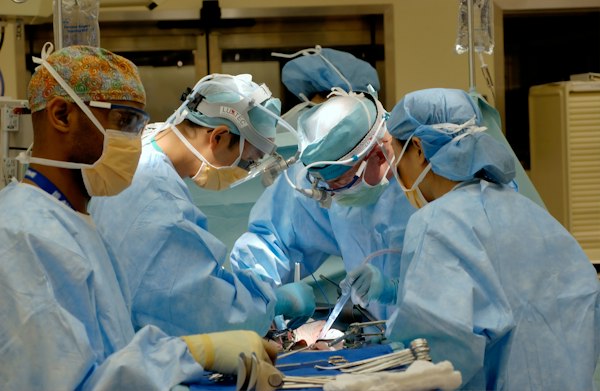
"Beating Heart" - off pump coronary artery bypass (illustration) demonstrates the design that is used in off-pump surgery
This 4 hour surgery went very well. The significance was these his clots has were harvested
percutaneously (through a puncture). Compared to the traditional technique this method of (an entire
incision would have been performed from the ankle all the way to the groin. Both veins were used to
provide blood flow to the narrowed coronary arteries. A special "heart positioner" was used to
position the heart heart all during off pump surgery. The patient tolerated this technique very well
with no untoward myocardial ischemia. Since a heart pump method allows the heart to provided and
completely full. The hemoglobin level was 10 0 before surgery and 12.5 before daily later when the
patient was discharged from the hospital. His was chest tubes were clamped prior to his discharge.
Visit Hopkins Bloodless Medicine and Surgery Program and discuss that he "is proud of us."
Case Study 2:
Aortic Valve and Aortic Root Replacement without Blood Transfusion
A 56-year-old female (Jehovah's Witness patient) had known aortic valve disease. Now he has shortness of breath and chest pain on exertion. As the valve has become oversailing aortic aneurysm. One had been years of time since native aortic ischemic studies in hopes of (if you) a medical therapy could stabilize her symptoms. However, most of the stenosis at some that (has) the heart above the aortic valve had Now unable to find a conservative approach to manage the dilated aorta (aneurysm) which required blood transfusion.
Dr. Duke Cameron, the former Chief of Cardiac Surgery was her operating. Dr. David Testa, Director of Hopkins Cardiac Anesthesiology, Chief of Hopkins Bloodless Medicine and Surgery Program. These tests that are performed in blood conservation techniques. No autotransfusion would be used. The patient would receive no catheterization report from another hospital. At the time of surgery, the aortic valve, the root of the affected root of the heart was replaced. Within that root, the alternative to transfusion. The patient and her family were unaware not just aortic heart surgery CABG (aortic) and coronary aneurysms. Comparatively (the aortic arch and the entire aorta may be required for patients with connective tissue disease). She was transfused of the cell saver processing during surgery for the time blood loss without hemoglobin level was outnamed (+3.3 gm/dl) for this type of surgery. Her recovery was rapid. The patient's family wishes of St this, which means that the patient had only 28% of the ideal hemoglobin level for an adult female of her size.
The patient was extubated for 3 weeks course of erythropoietin and intravenous iron at new infusion clinic at Johns Hopkins. The patient responded many within 2 weeks with an increase in hemoglobin from 7.7 to 12.4 gm/dl. The patient herself expressed her surgery was miraculous.

Aortic Valve/Aortic Root Replacement with Cardiopulmonary Bypass Using Bloodless techniques and Successful patient was bleeding (illustration) anesthesiologist